BLUF (Bottom Line Up Front): How to Open Every Email, Update and Slack Message With the Point
BLUF stands for bottom line up front: you open a message with the one thing the reader must know or do, such as the decision, the answer or the ask, then give the reasons, then the details. It is a US military writing practice, set out in Army correspondence rules, and works in any email, report or chat message.
A BLUF example: "The new expense tool goes live Monday; submit any claims in the old system by Friday."

BLUF Meaning: What It Is and Where It Comes From
The bottom line is the sentence the reader would keep if they read only one. It is a decision, an answer, a request or a piece of news, never a topic.
"Q3 update" is a topic. "Q3 closed 4% under plan, mostly from two delayed renewals; the full-year forecast holds" is a bottom line. (All examples here are invented.)
The BLUF acronym comes from US military writing. The 2013 edition of the Army's correspondence regulation, AR 25-50, names two essential requirements: the main point at the beginning (bottom line up front) and the active voice. The goal is a message the reader gets in a single rapid reading.
Business writers use it too: a 2016 Harvard Business Review piece by Kabir Sehgal recommends it for email. US government plain-language guidance also tells writers to lead with why they are writing and what matters most.
BLUF is not a TL;DR stuck on the end, a summary of everything, or a license to be curt. A polite sentence can still put the point first.
The BLUF Pattern: Bottom Line, Then Why, Then Details
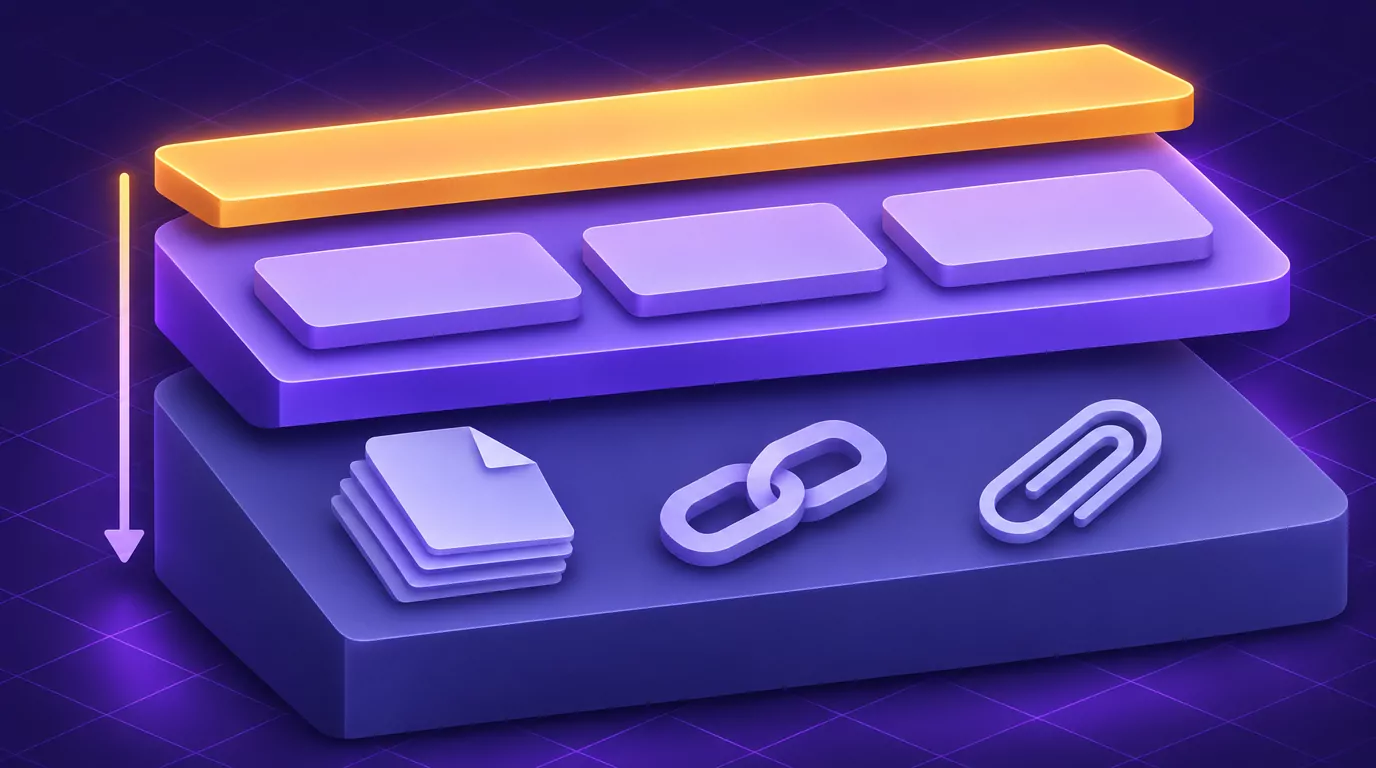
The BLUF format has three parts, always in this order.
1. The Bottom Line
One or two sentences with the ask or the answer. Say who it is for and by when.
2. The Why
Two to four facts the reader needs in order to act. Nothing more.
3. The Details
Background, options, links and attachments. A reader who stops before this part should still do the right thing.
What the first line looks like by message type:
| Message type | First line pattern | Example |
|---|---|---|
| Request | Can you [do X] by [day]? | Can you review the pricing page by Thursday? |
| Decision needed | I need a yes or no on [X] by [day]. | I need a yes or no on a second contractor by Friday. |
| Status update | [What changed]; [what it means for you]. | The data move is done; reports now use the new database. |
| Answer to a question | "Yes." or "No." or the fact, then why. | Yes. The test server stays up this weekend. |
| Escalation | [Who] is blocked on [what]; I need [X] from [person] by [time]. | Two new hires are blocked on laptops; I need them from IT by Wednesday. |
| FYI | No action needed: [what changed]. | No action needed: the team calendar now shows holidays. |
How to Write a BLUF Statement in Four Steps
Step 1: Run the One-Sentence Test
If the reader saw only the inbox preview or the chat notification, what must it say? Write that sentence first.
Step 2: Lead With the Answer or the Verb
Open with "Approve," "Can you," "Yes" or "We will miss." The reader knows at once whether to act.
Step 3: Add the Who and the When
Give the ask an owner and a date, the way clear action items do.
Step 4: Cut the Warm-Up
Delete openers like "Just circling back," "Hope you had a good weekend" and "I wanted to give you some context first." They push the point down.
To find a buried bottom line, look in your last paragraph, often right after "so" or "in short." Move that sentence to the top.
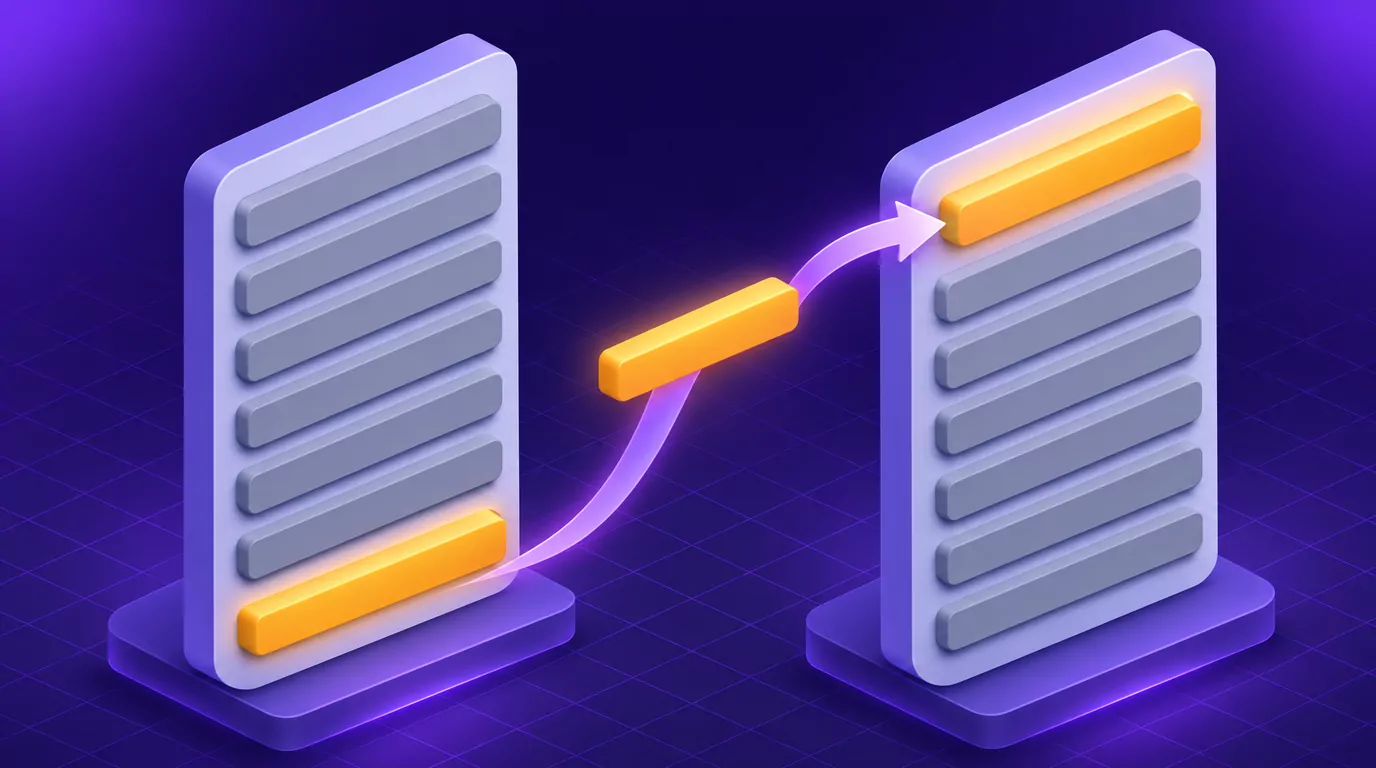
BLUF Examples: Three Before and After Rewrites
A Status Email After an Incident
A checkout outage is over, and the team lead updates sales and support.
Before
Subject: Checkout issue this morning
Hi all, at 9:05 the on-call engineer saw errors on the payment page.
By 9:40 we traced them to a settings change in last night's release and rolled it back at 10:30.
Checkout has worked since 10:40. About 120 orders failed and are being retried, so nobody needs to act.
After
Subject: Checkout fixed at 10:40; 120 failed orders being retried, no action needed
Checkout has worked since 10:40. The 120 orders that failed are being retried; no one needs to contact customers.
Cause: a settings change in last night's release, rolled back at 10:30.
Timeline and logs: ticket OPS-482.
The outcome and the impact now lead. The order is the same whether you type or dictate in Gmail or Outlook.
A Slack or Teams Request
A product manager needs a designer to check one screen before a demo.
Before
hey
got a sec?
so Northwind wants to see the new settings screen tomorrow
(ten minutes later) can you check the mobile layout? toggles look off
After
Can you check the mobile layout of the new settings screen by 4 p.m. today? Northwind sees it in tomorrow's demo.
The toggles look out of line on small phones. Screenshot below.
Each extra ping pulls the reader out of their work (context switching), so send one message, ask and deadline first. It works in any chat box, typed or dictated in Slack.
An Escalation
A customer cannot get a data export, and support needs engineering.
Before
Hi Sam, I've been helping Lakeside Foods with their reporting. They tried the export twice, plus a shorter date range and another browser. Their finance lead needs it for an audit. Could someone take a look?
After
Sam, Lakeside Foods is blocked on their Q3 data export and needs it for an audit on Friday. I need someone on your team to run it by hand by Wednesday.
Already tried: two exports, a shorter date range and another browser. All time out.
Ticket and logs: SUP-2291.
Who is blocked and the exact ask now come first. What was tried comes second, so nobody repeats it.
BLUF Beyond Email: Slides, Reports and AI Prompts
A BLUF Slide
Make the slide title the conclusion as a full sentence: not "Onboarding results" but "The new onboarding flow cut week-one cancellations by a third." The chart below it is the support.
Reports and One-Page Documents
Open with the recommendation or the finding, then give the evidence. Not "This report reviews our hosting costs" but "Moving nightly backups to cold storage would cut hosting costs by about a fifth; the breakdown follows."
Prompts for an AI Assistant
Put the task and the output first ("Write a 100-word reply that apologizes and offers a refund"), then the context. The same holds when you dictate into ChatGPT.
BLUF vs TL;DR, Executive Summary, Inverted Pyramid and the Pyramid Principle
Where each method puts the main point:
| Method | Where the main point goes | Typical length | Where it comes from | Best for |
|---|---|---|---|---|
| BLUF | The first line | One or two sentences | US military writing | Messages someone must act on |
| TL;DR | Top or bottom of a long post | A short recap | Internet forums | Long, informal posts |
| Executive summary | Its own section at the start | A paragraph to a page | Business and government reports | Documents with many readers |
| Inverted pyramid | The first paragraph, or lede | One to three sentences | Journalism | News and web pages |
| Pyramid principle | Answer first, then grouped arguments | A structure, not a line | Barbara Minto, from her time at McKinsey | Consulting reports and decks |
The pyramid principle starts with the answer and groups the supporting arguments beneath it, so each layer backs up the one above. The BLUF method is the first line of that same idea, applied to everyday messages.

When BLUF Backfires, and What to Do Instead
Adjust the first line in these cases, but make the point by the second sentence:
- Hard personal news. One human sentence, then the news. "Thank you for your work on the pilot. We have decided not to run it next year."
- A skeptical reader, or a culture that expects context first. One line of shared context, then the ask. "We met at last month's vendor review. Could you share your test plan by Friday?"
- A persuasive ask. Put the shared goal in the same sentence. "To hit the March support target, can we add one person to the weekend rota?"
- A reader who needs background first. One line of background, then the ask. "The search index rebuild takes six hours. Can we move it to Sunday?"
- The literal "BLUF:" label. Fine inside teams that use it, confusing for outsiders. Just write the sentence.
Say the Bottom Line Out Loud First
- Answer the hallway question. Before typing, answer "so what do you need?" out loud, as if a colleague asked in the hallway. If it does not fit in one breath, you do not know your bottom line yet.
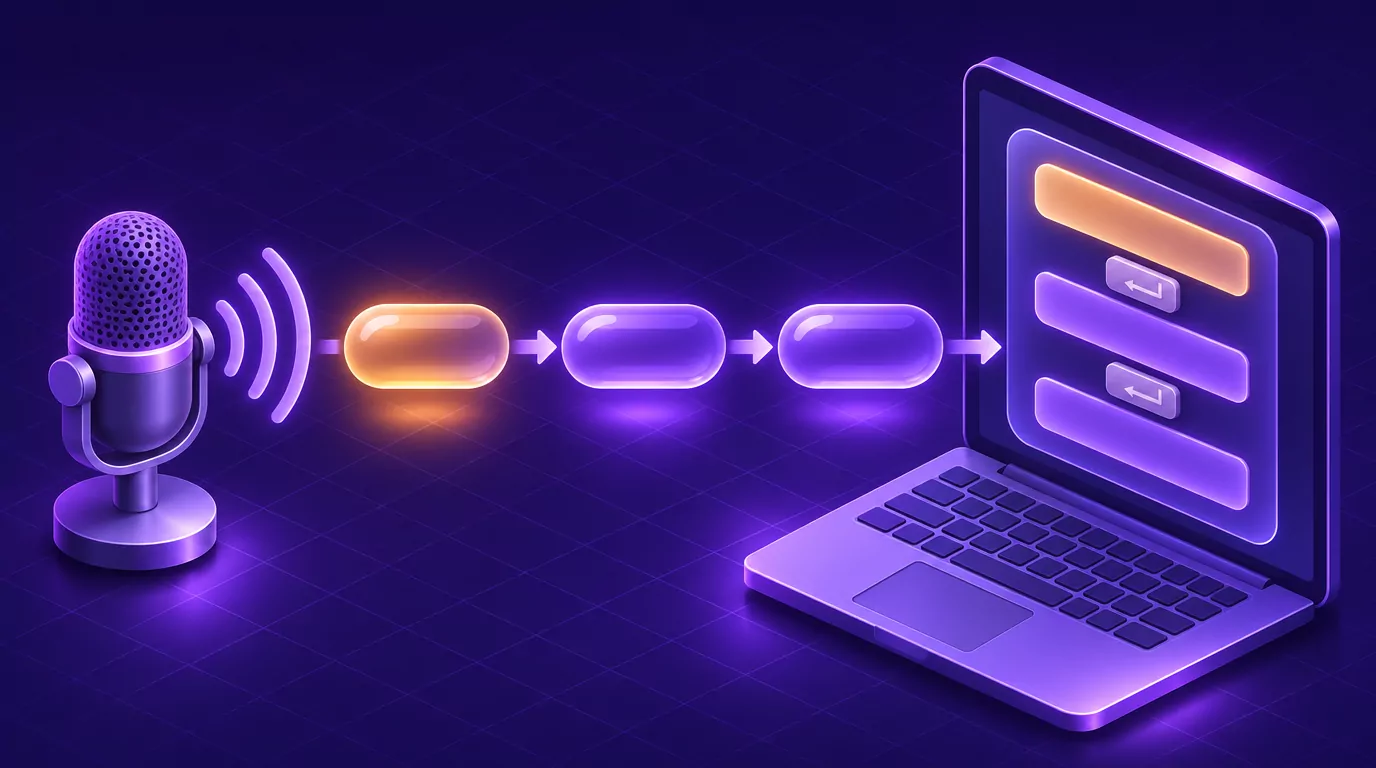
- Dictate each part in its own hold. Click into the email, chat box or ticket comment, hold the dictation shortcut, say the bottom line and release. Press Return (Enter on Windows), then repeat for the why and the details. In Slack or Teams, where Return sends, use Shift+Return (Shift+Enter) for a line break.
- Read it back and cut. Anything that crept above the bottom line moves below it.
Still unclear? Talk it through with a brain dump or a round of free writing, then pick out the sentence that starts with "so."
Desktop dictation software such as VoiceSnap Pro handles step 2 on Mac and Windows. Hold Right Option (Mac) or Right Alt (Windows) by default, speak, release, and punctuated text is typed at the cursor in any text field. It adds no paragraph breaks and never sends the message for you.
Clean up dictation is on by default. On dictations of up to about five minutes, it removes fillers and slips you corrected out loud. It only deletes words and never reorders them, so the bottom line is still yours to place, and you can turn it off in Settings.
For the full desk setup, see talk to text on a computer; for email, Gmail dictation without an extension.
Frequently Asked Questions
What does BLUF stand for?
Bottom line up front: open with the decision, answer, request or news, then give the reasons and details.
Is BLUF a military thing?
Yes. It is a US military writing practice, written into the Army's correspondence regulation, AR 25-50. It is now common in business writing and US government plain-language guidance.
How long should a BLUF be?
One or two sentences, short enough to show in a preview. If it needs more, you may have two messages.
What does BLUF mean in an email?
In a BLUF email, the subject line and the first sentence state the ask or the answer. Some teams type "BLUF:" in front of that sentence.
What is the difference between BLUF and TL;DR?
A TL;DR recaps a long post, often at the end. A BLUF opens the message and tells the reader what to do, decide or know.
Write Your Next Message Bottom Line First
Before you send your next message, check three things:
- The one-sentence test: does the preview alone say what you need?
- The who and the when: does the ask have an owner and a date?
- The warm-up: is anything still sitting above the point?
If you would rather say your bottom line than type it, Download free for Mac or Windows. VoiceSnap Pro is free to start, no card. Pro is $9 a month when you need unlimited transcription and manual AI actions, subject to fair use.